
Moore County Criminal History Checks
Begin a Moore County criminal history check with the record that answers the immediate question. The free North Carolina eCourts Portal is the best first stop for filed charges, hearings, public documents, and dispositions. The Moore Detention search answers who is in county custody or was admitted in a recent span. The arresting police agency holds its own incident report. For a certified county court search, use the Clerk of Superior Court. For your own fingerprint-supported statewide history, use the SBI Right to Review process.
Names alone can point to the wrong person. Compare the case number, Moore County location, dates, available party detail, age, and other lawful identifiers. A no-hit also needs care. Restricted warrants, juvenile matters, sealed files, upload lag, and records held in another system can all explain why a result is absent.
- Search eCourts Smart Search by name, case number, citation number, attorney, business name, cross-reference number, or nickname.
- Filter results to Moore County and compare dates and case details before treating a hit as the right person.
- Check the Moore inmate portal when the question concerns current custody or a recent admission.
- Ask the arresting agency for the incident or arrest report, since those reports do not form one countywide pool.
- Request Clerk certification or SBI self-review when an official product is needed.
Moore County's government hub shows the county doorway used to reach the sheriff, detention, and other local offices.
The county hub is a routing point, not the criminal-record counter itself. Court files still go through the Clerk, and agency reports stay with the office that created them.
Moore Criminal Cases Moved Online
Moore County joined eCourts and Odyssey on October 14, 2024. That change put free anonymous case summaries and public document images in a statewide browser portal. Smart Search finds the case record. Search Hearings is aimed at when and where a matter is set. NC Judgment Search focuses on judgments. Registration is not needed for ordinary public searching, though an account can save cases. Elevated access still depends on legal authority.
| Portal search | Accepted fields | Best use |
|---|---|---|
| Smart Search | Party name, case or record number, citation, attorney, business, cross-reference, or nickname | Find the case record and Register of Actions |
| Search Hearings | Case number, party, business, attorney, bar number, judicial officer, or courtroom | Find a scheduled hearing and location |
| NC Judgment Search | Party or case number, then case type, status, location, and judgment-date filters | Narrow a search to judgment entries |
New summaries or images may appear within minutes after an Odyssey upload, but that timing starts with the upload, not the underlying arrest or hearing. Converted older events may show a midnight time that is a system artifact. Public terminals at the courthouse remain useful when the online view is incomplete. They can search statewide criminal and infraction records and email noncertified results without charge, though printing may cost.
Official Background Checks in North Carolina
The SBI Right to Review lets a person obtain their own North Carolina fingerprint-supported criminal history. It is not a public name-search service for someone else. A local police or sheriff's office must take the FD-258 fingerprints after checking government photo identification. The subject then mails the original card, form, and a $14 certified check or money order to SBI CIIS. Cash, cards, personal checks, walk-in delivery, FedEx, and UPS are not accepted for this product.
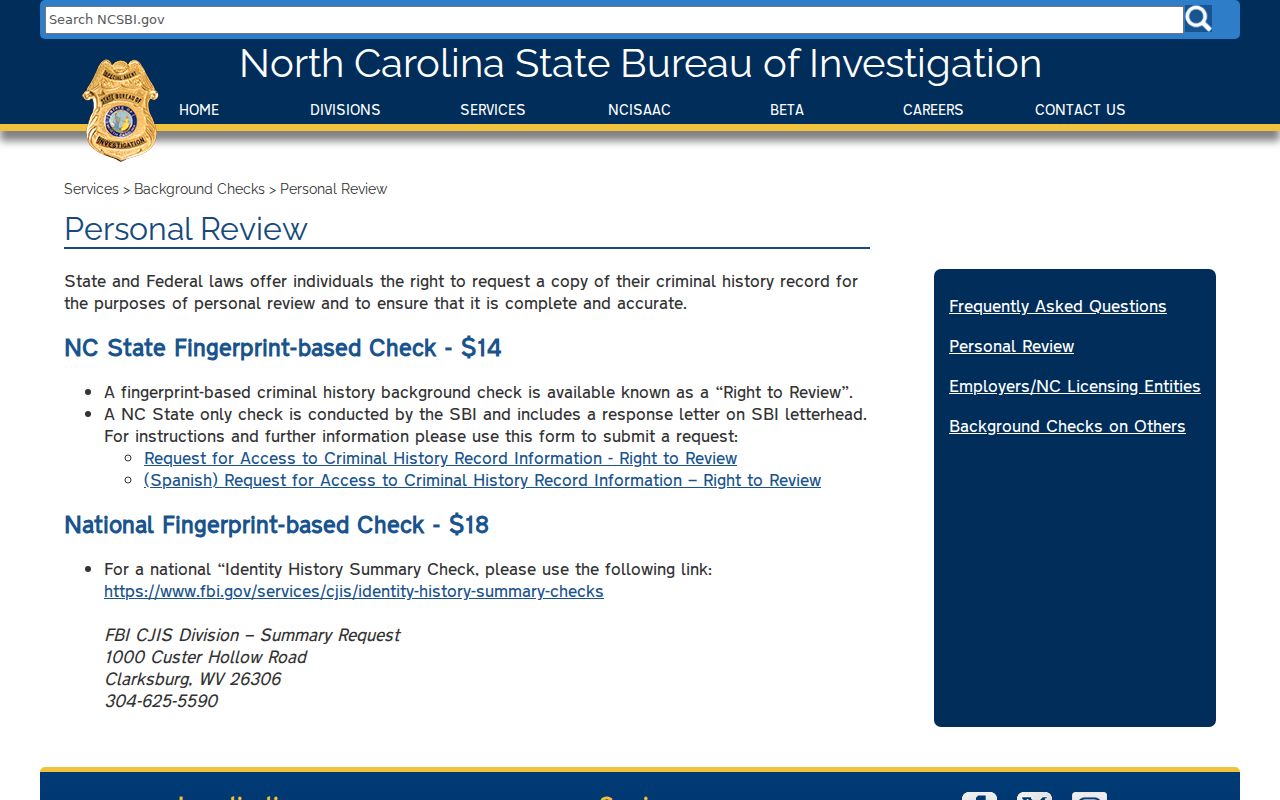
The SBI route is a self-audit of fingerprint-supported North Carolina arrest cycles and received dispositions. Results go to the subject by First-Class Mail.
The SBI Criminal Information and Identification Section maintains the central repository and links qualifying arrest fingerprints to state and FBI records.
A fingerprint-supported file can still need review. If a disposition is late or an agency entry is wrong, SBI provides a Written Exception process that is distinct from expunction.
| Official route | Scope | Fee and access |
|---|---|---|
| eCourts or courthouse terminal | Public court cases and documents | Search and public images are free |
| Moore Clerk AOC-CR-314 | Certified search of one county | $25; mail or counter |
| SBI Right to Review | Subject's NC fingerprint history | $14; original prints by U.S. Mail |
| FBI Identity History Summary | Subject's national fingerprint history | $18 through an official FBI route |
Moore Criminal Records at the Courthouse
The Moore County Courthouse at 102 Monroe Street in Carthage houses the Clerk for both District and Superior Court. The counter is open Monday through Friday from 8 a.m. to 5 p.m.; the main number is 910-722-5000, and mail goes to PO Box 936, Carthage, NC 28327. Public terminals can bridge gaps in the remote Portal. Paper files are inspected in the county where filed.
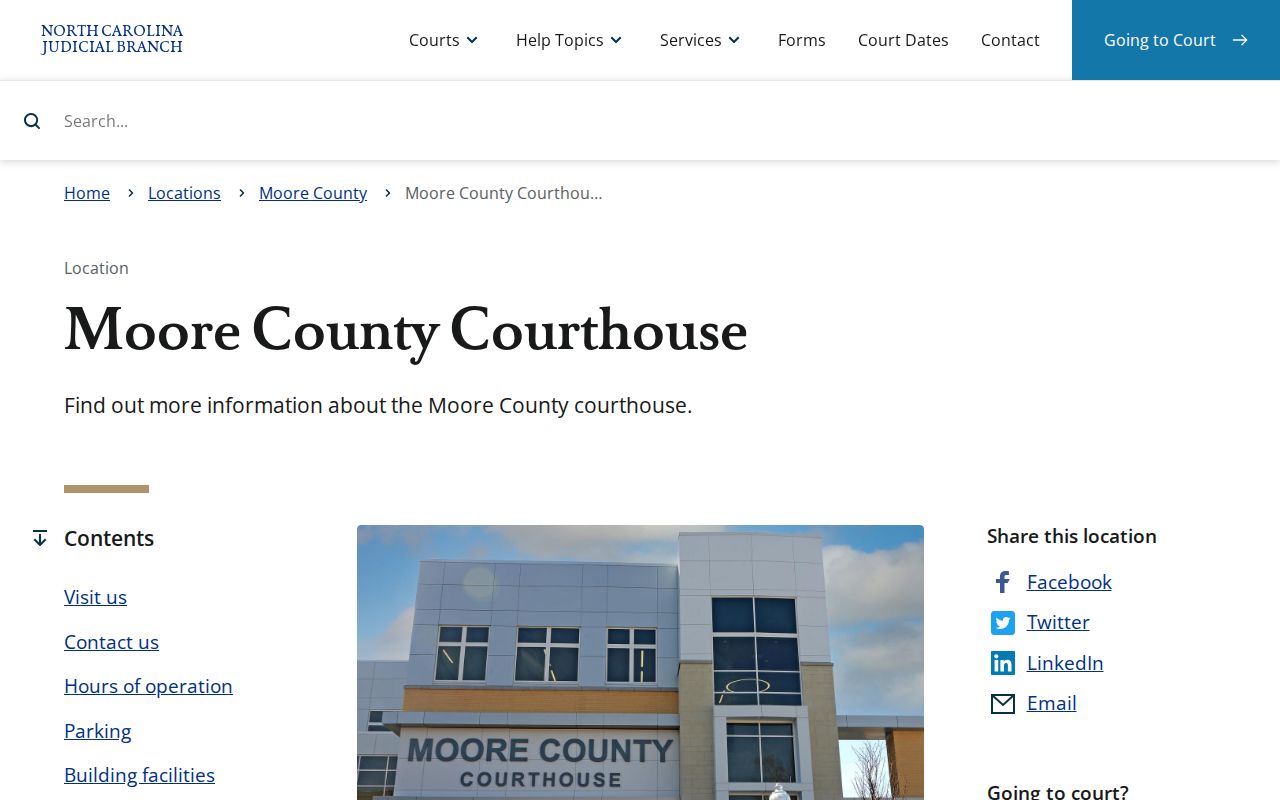
The courthouse page warns that parking is very limited. The closest listed area is behind the Register of Deeds office on Dowd Road, and the wheelchair entrance is at basement level.
Moore Clerk of Superior Court
102 Monroe Street
Carthage, NC 28327
910-722-5000
Monday-Friday, 8 a.m.-5 p.m.
Moore County Sheriff's Office
302 S. McNeill Street
Carthage, NC 28327
910-947-2931
Office Monday-Friday, 8 a.m.-5 p.m.
Moore Detention Center
302 South McNeill Street
Carthage, NC 28327
910-947-2980
Call for a recent admission not yet shown online.
Kinds of Criminal Records
Moore County records follow separate custodians because each file documents a different stage. An officer creates the incident or arrest report. Detention creates the custody entry. A magistrate begins a judicial record, and the Clerk maintains the District or Superior Court file. SBI receives a fingerprint-supported arrest cycle and later dispositions. NCDAC holds state prison and supervision information, not the county jail roster.
- Incident and arrest reports record the event and public arrest facts, while protected investigative narrative may be withheld.
- Booking records show a county detention admission and published charge, not guilt.
- Court case files track complaints, events, hearings, judgments, costs, and disposition.
- Fingerprint history links arrest cycles with dispositions that SBI received.
- Corrections and registry files address state custody, supervision, or registration duties.
These differences matter when facts conflict. A booking charge can change when prosecutors file the court case. A court dismissal does not by itself mean that an arrest cycle has been expunged. The Moore County court case lookup is the better source for the final judicial result.
Moore Arrest Records by Recent Days
The official Moore inmate tool has three separate search paths: a name autocomplete after two characters, a charge autocomplete after two characters, and an “over the last number of days” field that takes a one-to-four digit number. The recent-days option works as the county's official booking-log view. “View all inmates” and “View all charges” broaden the display in different ways.
The inspected public grid showed only full name, age, race, sex, and admit date. It did not show a public mugshot, full birth date, bond, booking number, arresting agency, court date, or release date. Admit date is not the same as offense time or conviction date. For a new admission that has not appeared, call Moore Detention at 910-947-2980. For the underlying report, contact the agency that made the arrest.
The Moore County Sheriff's Office services and contact page identifies the local agency route for unincorporated incidents.
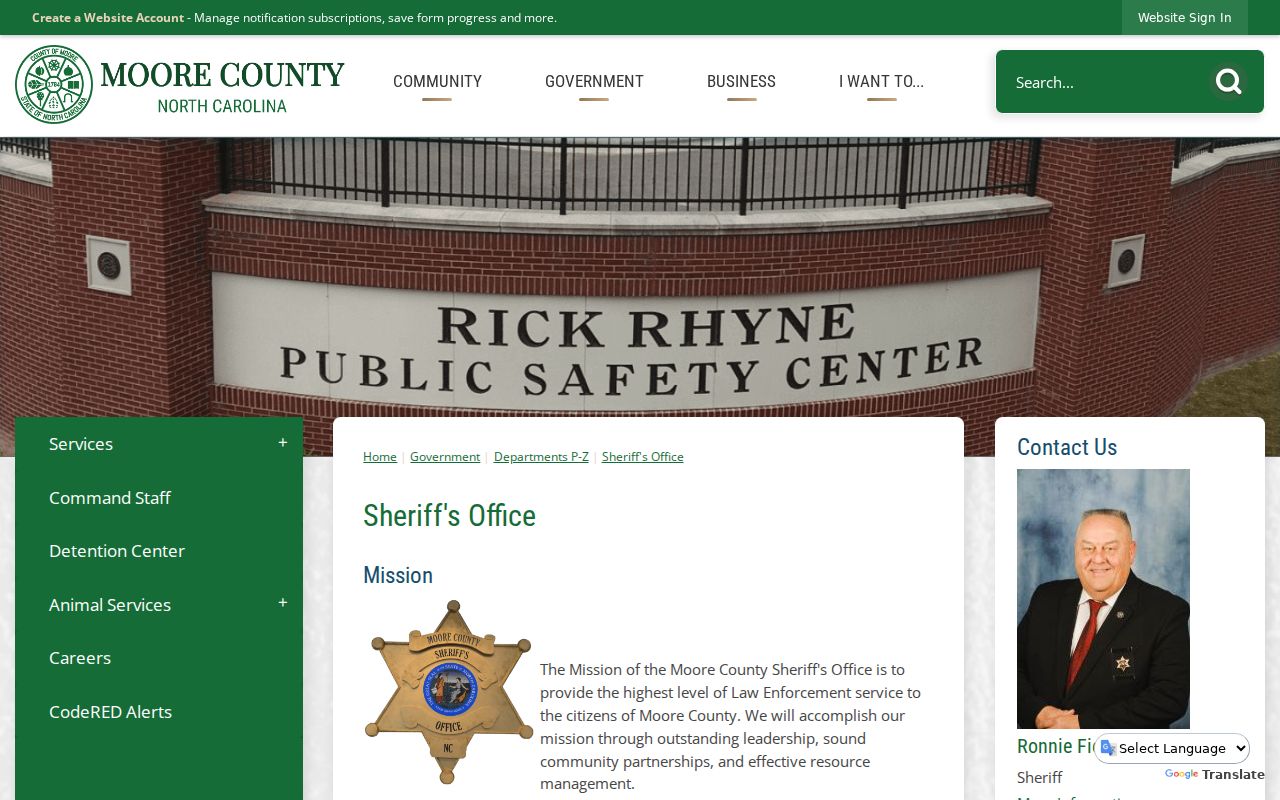
Municipal reports stay with Pinehurst, Southern Pines, Aberdeen, or the other city police agency even when the person is booked into the county detention center.
Moore County Criminal Records: What They Contain
A Moore County criminal record can mean several sets of fields. The court Register of Actions may contain a case summary, assignment, parties, events, dispositions, hearings, financial information, and public documents. The jail view is much narrower. An SBI CCH cycle is built around fingerprint identity, arresting agency and date, arrest charges, and any linked disposition received from the court.
| Name and identifiers | Names and lawful identifying fields vary by system; compare more than a name alone. |
|---|---|
| Arrest and booking | Agency, date, charge, and custody facts may appear across separate arrest and jail files. |
| Charges and statutes | Booking allegations can differ from charges later filed by the prosecutor. |
| Disposition | Dismissed, not guilty, guilty, and convicted are distinct court outcomes. |
| Sentence | The judgment controls the imposed sentence, costs, and court-ordered terms. |
| Custody or supervision | Moore Detention covers county custody; NCDAC covers state prison and supervision. |
Public fields help narrow a match, but only fingerprint comparison establishes identity in the way the registry and SBI caution. Social Security numbers do not display in the public Portal.
Correcting Moore Criminal History Gaps
A missing disposition can result from reporting lag, an unlinked arrest cycle, an older paper file, or a restricted matter. First compare the eCourts file with the Moore Clerk's paper or certified record. If the court shows a result but a personal SBI Right to Review does not, the Written Exception route lets CIIS audit the repository entry with the contributing arrest agency. An administrative hearing under G.S. 150B-23 may follow an adverse audit determination.
Correction and expunction solve different problems. Correction challenges inaccurate information. Expunction is a court remedy for accurate history that qualifies under statute. A dismissal is not an automatic erasure of every related arrest entry. After a granted order, the Clerk notifies state and local agencies, and those agencies need time to process their systems.
North Carolina Public Access Laws
North Carolina law opens many government and Clerk records but preserves defined limits. Chapter 132 permits inspection and copies of covered public records as promptly as possible. It does not require an office to create a custom report. A narrow request should name the custodian, record type, incident or case number when known, date range, location, and desired format.
The North Carolina Public Records Law is the main text governing county and municipal requests.
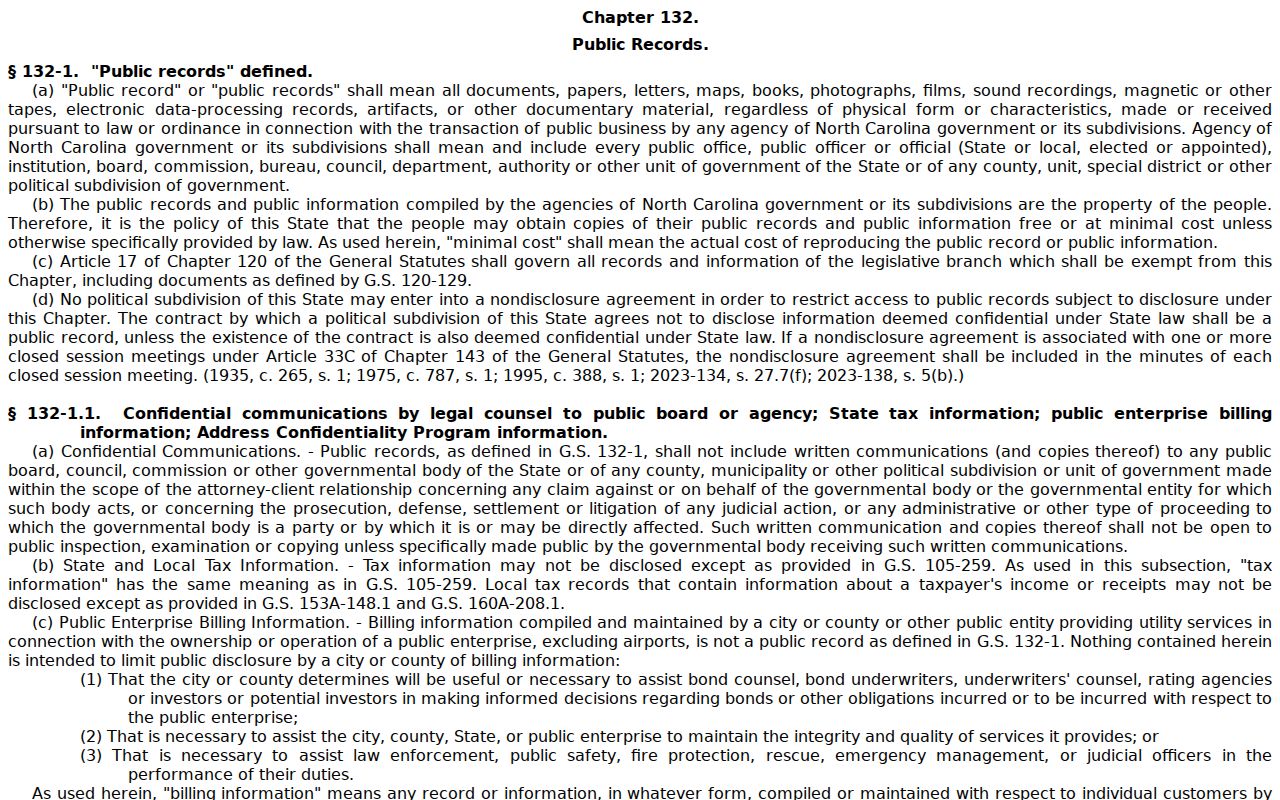
The statute distinguishes public arrest facts from protected criminal intelligence, confidential identifiers, juvenile material, and other exemptions.
Key North Carolina laws:
G.S. 132-1 and 132-6 define public records and reasonable inspection and copy rights.
G.S. 132-1.4 protects investigative material but opens listed incident and arrest facts.
G.S. 7A-109 requires Clerk inspection unless a court record is sealed or confidential.
G.S. 15A-145.5 sets rules for qualifying conviction expunctions.
Moore Warrant Records Need Verification
No separate official public Moore County active-warrant database was found in the research. Unreturned criminal warrants are restricted in eCourts. A Portal no-hit therefore does not clear a person. Call the Sheriff's Office at 910-947-2931, the Clerk at 910-722-5000, or magistrates at 910-722-5019 through independently published numbers. If a city police agency issued the process, confirm that route as well.
The Moore sheriff warns that law enforcement will not demand payment to avoid arrest. End a call that claims a jury-duty warrant and asks for prepaid payment. Then dial the official sheriff number yourself. If an official confirms a warrant, ask the issuing office about appearance, surrender, and bond procedure. A phone call does not itself clear the warrant.
Note: An executed warrant may later appear as a public court event, while upload and return processing can still take time.
Restricted, Sealed & Expunged Records
Juvenile matters, sealed cases, unreturned warrants, protective orders, protected personal identifiers, and expunged records do not appear like ordinary public cases. North Carolina calls the clearing remedy expunction. A petition is filed with the Clerk where the charge or conviction occurred. A qualifying conviction petition typically costs $175, while dismissal or not-guilty relief generally has no fee unless a diversion or deferred prosecution affects the rule. Processing often takes several months.
The North Carolina Judicial Branch expunction overview explains the filing route and current forms.
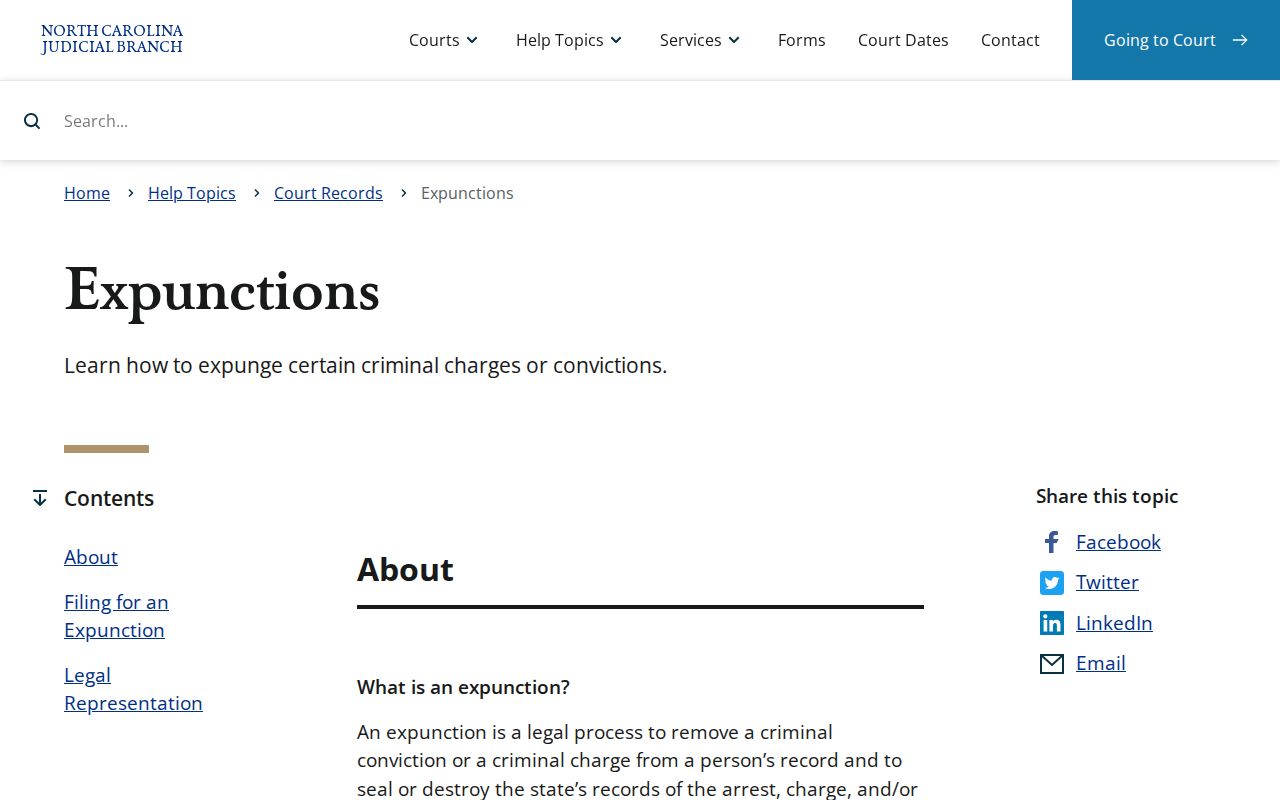
Waiting periods and offense exclusions must be read together. The clock generally runs from conviction or completion of active sentence, probation, or post-release supervision, whichever is later. An outstanding warrant or pending case can also affect the required showing.
Moore Jail and State Record Split
A person newly held in Carthage may not appear in the NCDAC locator because the state system excludes county jail custody. After a transfer to state prison, the current Moore roster may stop being the right source. The court judgment supplies the sentence imposed, while NCDAC shows correctional or supervision status. SAVAN and VINELink add notifications but are not certified case records.
The NCDAC criminal offender search hub offers prison, probation, parole, absconder, and release tools with history reaching back to 1972.
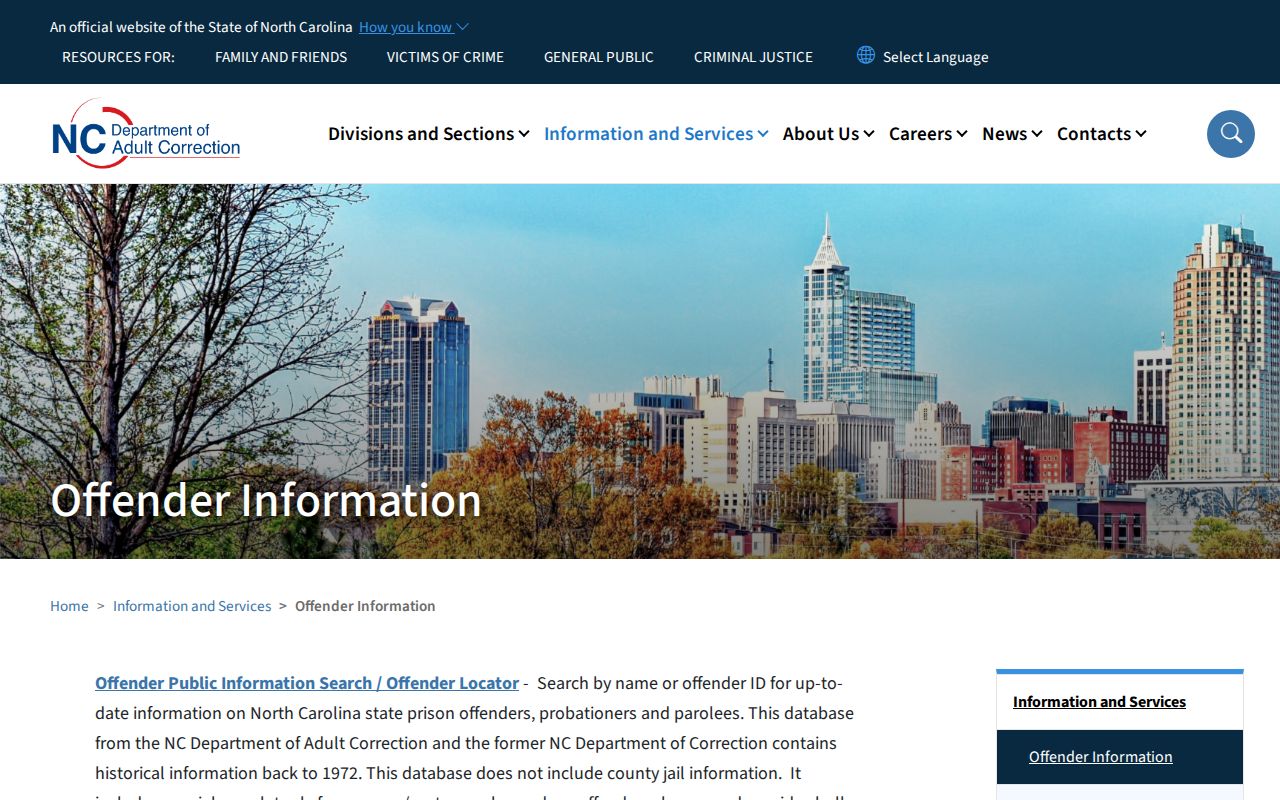
Probation, parole, and post-release supervision are not synonyms. Probation is a court-imposed community sentence. The Post-Release Supervision and Parole Commission handles parole decisions for eligible cases and performs statutory post-release functions.
City-by-City Criminal Records in Moore County
Moore County has eleven incorporated municipalities, and police incident reports remain agency by agency. The three largest in the official 2020 table are Pinehurst, Southern Pines, and Aberdeen. Each has a distinct local report route. All three send criminal court matters to the unified District and Superior Court system in Carthage, and arrests can book at Moore Detention. Begin with the city police source, then move to county court or custody records only when the question reaches that stage.
Pinehurst Record Check
Citizen Connect offers daily reports, incident searches, mapping, and a separate Criminal Papers search.
Southern Pines Record Check
The police Records page links a report portal, while formal town requests use a separate administration route.
Aberdeen Record Check
Citizen Connect works alongside an in-person and mail records counter with specific crash-copy options.
Moore Court Records and Assigned Counsel
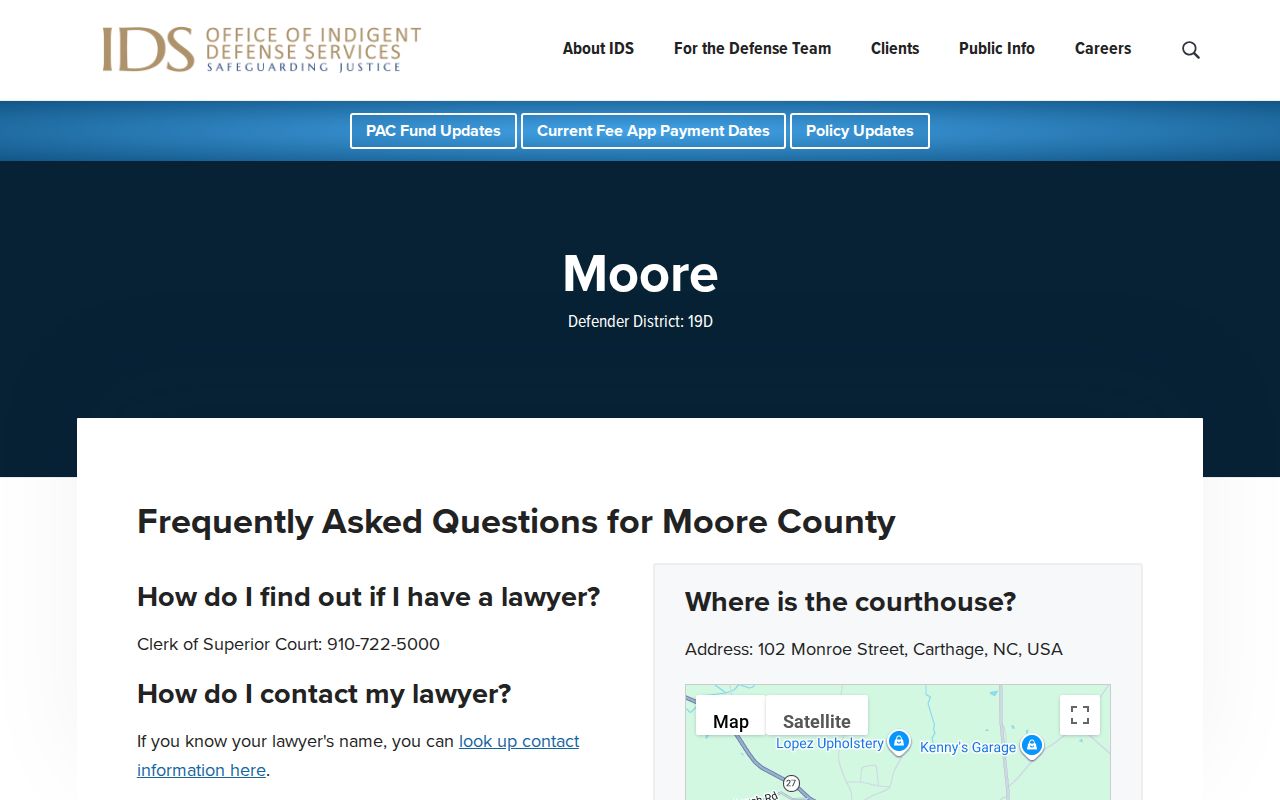
Moore County is in Defender District 19D but has no institutional public defender. A person seeking assigned counsel starts with the Clerk under the local appointed-counsel plan. That local structure creates a Portal interpretation trap: an eCourts “Attorney Type” label can suggest a public-defender assignment even though Moore has no public defender office. Confirm the lawyer's identity with the Clerk rather than relying on the category alone.
The North Carolina Indigent Defense Services Moore County page identifies the county's appointed-counsel structure.
The District Attorney prosecutes cases but does not serve as the court-record custodian. Filed dockets, copies, certifications, and counsel verification begin with the Clerk at the Carthage courthouse.